534 Lincoln Ave, Bellevue, PA 15202


Lost Your Dental Crown? Here’s What to Do Next
You’re enjoying dinner near the village green or brushing your teeth before bed when suddenly something feels loose. A small cap comes off in your hand. Your heart drops. Did something serious just happen?
Take a breath.
Losing a crown feels alarming, especially if the tooth underneath looks small or sensitive. You might worry about pain, infection, or whether you’ll need major treatment. The good news is that this situation is common and usually manageable. Modern restorative work is designed to be repaired efficiently when issues arise.
Patients at Monda & Weiss Family Dentistry experience this from time to time, and in most cases, it can be addressed quickly and comfortably. Below, you’ll find clear steps on what to do next, when it’s urgent, and how to prevent it from happening again.
Why Do Dental Crowns Fall Off?
Although restorations are built to last, they are not indestructible. Dental crowns can loosen or detach for several reasons.
First, the cement holding the crown in place can weaken over time. Years of chewing, temperature changes from hot coffee or iced drinks, and natural wear gradually break down bonding materials.
Second, decay may form underneath the crown. If bacteria slip beneath the edge and compromise the tooth structure, the fit loosens, and the crown may detach.
Trauma is another common cause. Biting into hard foods like ice, popcorn kernels, or hard candy can create enough force to dislodge it. Accidental impact during sports or even grinding your teeth at night also increases stress on restorations.
Improper fit plays a role as well. If a crown is slightly misaligned or your bite has shifted over time, uneven pressure may eventually cause failure.
Here’s the important part: not every lost crown is an emergency. However, some situations require immediate attention. Knowing the difference helps you respond appropriately.
Is It a Dental Emergency?
Not all detached crowns require rushing to an emergency room, but some symptoms signal urgency.
When It’s Urgent
Seek immediate care if you notice:
- Severe or throbbing pain
- Bleeding that does not stop
- Swelling in the gums or face
- A sharply exposed, highly sensitive tooth
These symptoms may indicate infection or nerve involvement. Prompt care protects the tooth and prevents complications.
When It Can Wait 24-48 Hours
You may have a short window to schedule an appointment if:
- There is no significant pain
- The crown remains intact
- You only feel mild sensitivity
Even in these cases, do not delay too long. The underlying tooth is vulnerable without protection. Temperature sensitivity can increase quickly, and the tooth may chip if left exposed.
Whether urgent or not, calling your dentist right away is the safest choice. Early evaluation keeps a simple fix from becoming something more involved.
What to Do Immediately After It Falls Out
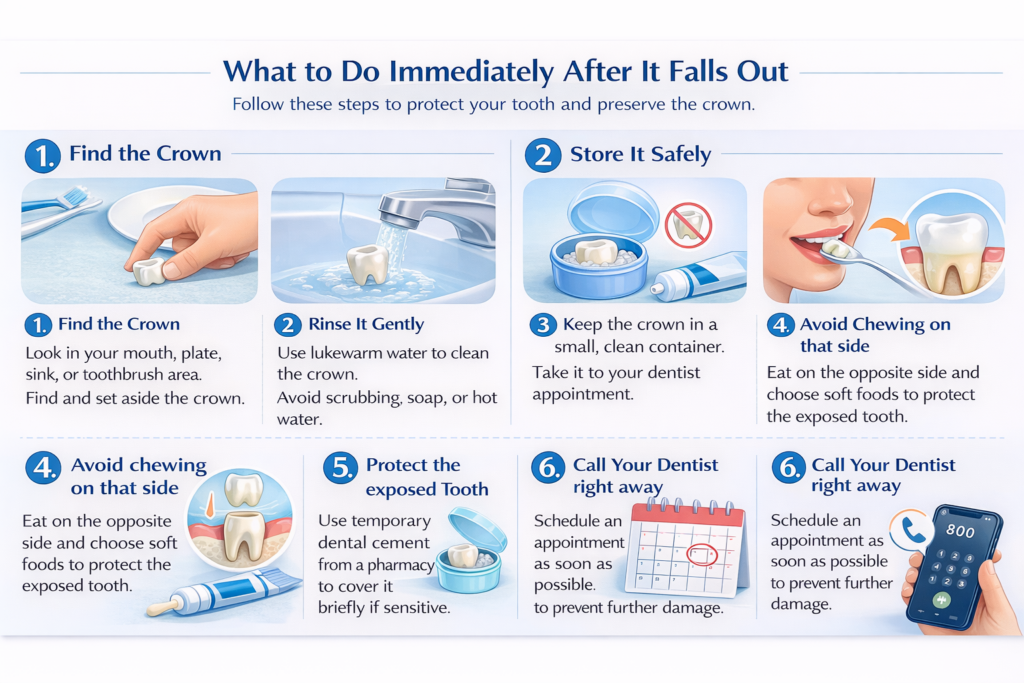
If your crown comes off, your first reaction might be panic. Instead, focus on protecting the tooth and preserving the restoration. Acting quickly and calmly makes a big difference.
1. Find the crown
Retrieve it as soon as you notice it has come loose. Check your plate, sink, or toothbrush area. Many dental crowns in Bellevue can be recemented if they remain intact.
2. Rinse it gently
Use lukewarm water to remove debris. Do not scrub it with a brush or use soap. Avoid scraping the inside, as that surface helps your dentist determine a proper fit.
3. Store it safely
Place the crown in a small, clean container. Keep it dry and bring it to your appointment. Do not wrap it loosely in tissue, where it could be accidentally discarded.
4. Avoid chewing on that side
The exposed tooth is vulnerable. Eat soft foods and chew on the opposite side of your mouth to prevent cracking or discomfort.
5. Protect the exposed tooth
If you experience sensitivity, you may use temporary dental cement from a pharmacy to cover the tooth briefly. This is only a short-term solution. It does not replace professional bonding and should not be considered a permanent fix.
6. Call your dentist right away
Schedule an appointment as soon as possible. Even if you are not in pain, the underlying tooth needs protection. Prompt care helps prevent further damage and increases the likelihood that your existing crown can be reused.
Should You Try to Glue It Back Yourself?
This is one of the most common mistakes patients make.
Household glue is not designed for oral tissues. It can damage enamel, irritate gums, and introduce harmful chemicals into your mouth. Even worse, improper placement can trap bacteria underneath, increasing the risk of infection.
Another issue is alignment. If the crown is not seated precisely, your bite may shift. That imbalance can strain neighboring teeth and even affect your jaw.
Over-the-counter dental cement may be used briefly if you cannot see your dentist immediately. However, it is only a temporary solution and should never replace professional evaluation.
A dentist will assess the integrity of the crown, check for decay, and ensure proper fit. Attempting a permanent fix at home can make future repairs more complex.
What Will the Dentist Do?
Many patients feel anxious because they don’t know what to expect. In reality, appointments for lost dental crowns in Bellevue are often straightforward.
- If the crown and underlying tooth remain healthy, your dentist may simply clean both surfaces and recement the restoration securely.
- If the fit needs refinement, small adjustments may be made to improve bite balance.
- If the crown is cracked or damaged, a replacement may be necessary. Modern techniques allow precise, natural-looking results.
- If decay has developed beneath it, the tooth will be treated first before a new restoration is placed.
- In rare cases where the nerve is affected, a root canal may be required before re-crowning.
Most visits are efficient and focused on restoring comfort quickly. Patients are often relieved by how manageable the process feels.
What Happens If You Ignore It?
Ignoring a lost crown increases risks over time.
The exposed tooth becomes sensitive to temperature and pressure. Without protection, it may crack under normal chewing forces. Bacteria can invade the vulnerable area, leading to infection. Swelling and pain may develop.
The surrounding teeth can shift into the open space, altering your bite. That shift complicates future restoration. What could have been a simple recementing appointment may evolve into more extensive treatment.
Addressing the issue early protects both your tooth and your overall oral health.
How to Prevent Future Crown Loss
Prevention begins with awareness.
Avoid chewing ice, hard candy, or non-food objects. These habits place unnecessary stress on restorations. If you grind your teeth at night, a custom nightguard helps distribute pressure evenly.
Maintain thorough oral hygiene. Brush carefully around crown margins and floss daily to prevent decay underneath. Schedule regular checkups. Early detection of cement breakdown or bite imbalance prevents sudden detachment.
Older crowns should be evaluated proactively. Restorations do not last forever, and replacing them before failure protects the underlying tooth.
Taking these steps significantly reduces the chance of unexpected problems.
Losing a crown can feel unsettling, but it is usually manageable when handled promptly. Acting quickly prevents sensitivity, infection, and further damage. If this has happened to you, contact Monda & Weiss Family Dentistry as soon as possible. Early evaluation keeps treatment simple and comfortable.
Most cases can be resolved efficiently, allowing you to return to daily life without prolonged discomfort. Call today or book online to protect your smile and restore your peace of mind.
FAQs
Can I eat after my crown falls off?
Yes, but stick to soft foods and chew on the opposite side. Avoid hard, sticky, or very hot and cold items.
Is losing a crown common?
Yes, it happens occasionally due to wear, cement breakdown, or biting hard foods. It does not automatically mean something serious is wrong.
Can the same crown be reused?
Often, yes. If the crown is intact and the underlying tooth is healthy, it can sometimes be cleaned and recemented.
How long do crowns typically last?
Most last 10–15 years or longer with proper care, regular checkups, and good oral hygiene habits.
Can I use super glue to put it back?
No. Household adhesives are unsafe for oral tissues and can damage the tooth or gums. Only temporary dental cement is appropriate short term.