534 Lincoln Ave, Bellevue, PA 15202


Partial Denture Adjustment: What to Expect in the First Few Weeks
If you’ve recently been fitted with partial dentures, you’re likely experiencing a mix of emotions. You may be excited about the possibility of restoring your smile, but also worried about the adjustment process. It’s completely normal to have concerns about comfort, eating, and speaking in the first few weeks. The good news? With time, partial dentures become a natural part of your daily life.
In this blog, we will walk you through what to expect during the first few weeks with your new partial dentures. You’ll learn about the typical timeline for adjustments, common issues, tips for comfort, and when it’s time to seek professional help. Let’s dive in!
The First Few Days: Getting Used to Your Partial Dentures
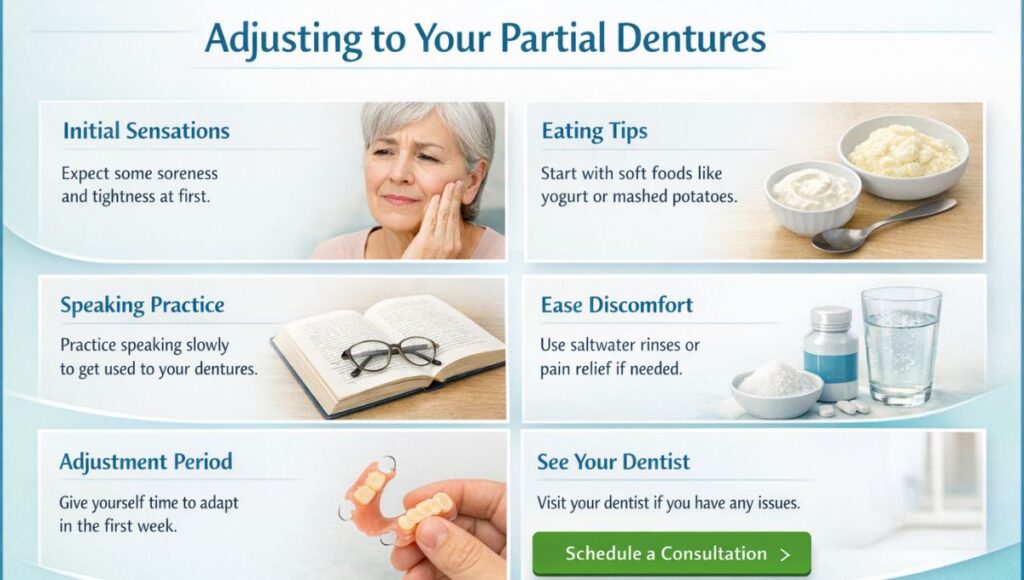
Adjusting to partial dentures can take a bit of time, but understanding what’s coming helps ease the transition.
Initial Sensations
Right after getting your partial dentures, it’s normal to feel some discomfort. You may experience sore spots or pressure as your mouth gets used to the new appliance. Don’t be alarmed! Your gums and soft tissues need time to adjust to the changes. This sensation should gradually subside as your mouth becomes accustomed to the dentures.
Eating and Speaking
For many people, eating and speaking can feel different at first. You may notice that your bite feels off or that it’s harder to speak clearly. This is completely common! It can take a little while for your mouth to adjust to the shape and fit of your partial dentures in Bellevue.
To help with these changes, start by eating soft foods like soups, yogurt, or mashed potatoes. These foods are gentle on your gums and will make it easier to get used to your dentures. When speaking, try to practice reading aloud or repeating words slowly. This helps your tongue and mouth adjust to the presence of the dentures.
Tips for Easing Discomfort
While your gums are healing, there are several ways to ease the discomfort:
- Saltwater Rinse: A warm saltwater rinse can help reduce irritation and promote healing.
- Pain Relief: Over-the-counter pain relief, like ibuprofen, can help manage any discomfort.
- Denture Adhesives: If you find your dentures slipping, a denture adhesive can help improve the fit and stability.
The First Week: Adjustments and Fine-Tuning
The first week with partial dentures is an essential period for your mouth to adapt and adjust to the new appliance. During this time, you will likely experience several changes as your mouth gets used to the dentures.
What to Expect
During the first week, your partial dentures may feel slightly uncomfortable as your gums and other soft tissues adjust. It’s normal to experience some soreness or pressure in the areas where the dentures make contact with your gums. This can be especially noticeable when chewing or speaking. Over time, these sensations should diminish as your mouth becomes accustomed to the dentures.
You may also notice that your dentures initially feel a bit loose or tight. This is a natural part of the adjustment process, and with time, your mouth will mold to the shape of the dentures, making them feel more stable.
Common Issues
While most adjustments during the first week are temporary, some common issues can arise. These include:
- Irritation and Sore Spots: The most common complaint in the first week is irritation around the gums, where the dentures may be rubbing. This can cause small sores or discomfort. It’s essential to take care of any sore spots early to avoid further complications.
- Difficulty Chewing: As you adjust to wearing partial dentures, chewing can feel strange or even difficult. It may take a little while before you’re able to eat comfortably with your new dentures. It’s a good idea to stick to softer foods like mashed potatoes, yogurt, or soup during this time.
- Speech Issues: Speaking clearly may feel awkward at first, as your mouth adjusts to the dentures. Practicing speaking and reading out loud can help speed up this adjustment.
Professional Adjustments
It’s important to remember that partial dentures might need some fine-tuning after the first few days. If discomfort persists or you’re having trouble chewing or speaking, it’s essential to visit your dentist. Monda & Weiss Family Dentistry can make small adjustments, such as reshaping certain areas or adjusting the fit, to reduce irritation and enhance comfort.
You should plan to visit your dentist if:
- The soreness does not improve after a few days.
- Your dentures feel too tight or loose.
- You experience difficulty with regular activities like speaking or eating.
- You notice significant clicking or shifting of the dentures.
At your appointment, the dentist will carefully assess the fit of your dentures, make necessary changes, and ensure they are functioning as they should. These adjustments will help you feel more comfortable and confident as you continue to adjust to your new smile.
In summary, the first week with partial dentures involves a series of natural changes, some minor discomfort, and important professional adjustments to help ensure the best fit and comfort.
Weeks 2-4: Continuing Comfort and Adjustments
After the first few weeks, your partial dentures should start feeling much more natural.
Improved Comfort
By weeks 2-4, the discomfort will significantly decrease. Your gums should be healing, and your mouth will have adapted to the partial dentures. They will begin to feel more like a natural part of your daily life, and you’ll notice improvements in your ability to eat and speak comfortably.
Ongoing Adjustments
While the discomfort will diminish, you may still need some minor adjustments to the fit. Your dentures may need fine-tuning to ensure they’re properly aligned with your bite. Don’t be discouraged if you feel the need for adjustments. It’s part of the process!
Caring for Your Dentures
As your comfort improves, it’s important to continue taking care of your partial dentures. Clean them daily using a soft brush and denture cleaner. Avoid using regular toothpaste, as it can scratch the surface. Be sure to soak your dentures overnight in a cleaning solution to keep them in good shape. Proper care will ensure that your dentures last longer and remain comfortable.
Signs You Need to Visit Your Dentist
Even after the first few weeks, there may be times when your partial dentures require professional care. It’s important to recognize when something isn’t quite right.
When to Seek Help
If you continue experiencing significant discomfort or your dentures cause persistent soreness, it’s time to visit Monda & Weiss Family Dentistry for an evaluation. Other signs that you may need an adjustment include:
- Difficulty Chewing or Speaking: If your dentures make it hard to chew or speak, it might be due to poor fit or irritation.
- Clicking or Loosening: If your dentures are loose or clicking when you speak, your dentist can adjust them for better stability.
- Infection or Irritation: If you notice signs of infection or ongoing irritation, it’s important to get help right away to avoid further complications.
Importance of Follow-Up Visits
Even if you’re feeling more comfortable, regular visits to the dentist are essential to maintain the health of your mouth and the fit of your partial dentures in Bellevue. These check-ups help ensure that any small issues are addressed before they become big problems.
Tips for a Smooth Adjustment Process
Adjusting to partial dentures takes time, so it’s important to stay patient and positive.
Patience is Key
It’s normal to experience some discomfort in the first few weeks. However, the more you wear your partial dentures, the more comfortable they will become. Stay patient and give your body time to adapt to the changes. With consistency and proper care, your dentures will eventually feel natural.
Supportive Practices
Here are a few tips to make the process even easier:
- Practice Speaking: Read out loud or talk to friends and family to get used to speaking with dentures.
- Eat Soft Foods: Continue with softer foods as you adjust, and gradually add more solid foods as your comfort increases.
- Stay Positive: Remember that adjustments are normal, and the result will be worth the effort!
Adjusting to partial dentures takes time, but with patience and proper care, they will become a seamless part of your daily routine. If you’re still experiencing discomfort or have questions about your adjustment process, the team at Monda & Weiss Family Dentistry is here to help.
Contact us today to schedule your follow-up appointment or to discuss any concerns you may have about your partial dentures. We’re committed to helping you achieve a comfortable, confident smile!
FAQs
How long does it take to get used to partial dentures?
It typically takes a few weeks for your mouth to fully adjust to partial dentures, but discomfort should decrease over time.
Is it normal for partial dentures to feel uncomfortable at first?
Yes, it’s common to experience discomfort, sore spots, and pressure in the first few days as your mouth adjusts.
What should I do if my dentures are causing irritation?
You can use a saltwater rinse, apply denture cushions, or visit your dentist for adjustments if irritation persists.
Can I eat normally with partial dentures?
It may be challenging at first, but start with soft foods, and gradually return to a regular diet as you get more comfortable.
How long will I feel pain after getting partial dentures?
Pain usually subsides within a few days to a week, but some minor discomfort may persist for up to four weeks.